Showing posts with label baby health. Show all posts

Wednesday, May 15, 2013

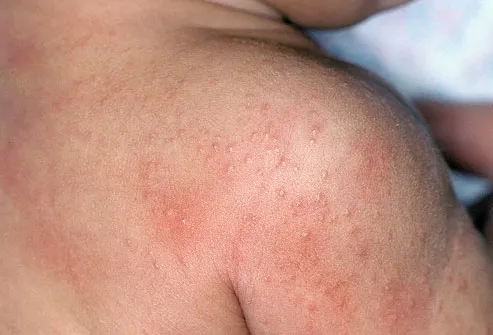
Heat rash In Baby

1 comments

What is heat rash?

If your baby suddenly gets a red, pimply rash on the neck, under the arms on the edge of the diaper or underwear, then that's probably heat rash.


This rash, also called sweat bubbles can arise when your child is overheated in hot, humid weather or dressed way too warm. It often occurs in skin folds and body to places where clothing rubs - ie chest, abdomen, neck, armpits, genitals and buttocks. If your child is wearing hats or caps, then you can also form on the scalp heat rash.

Heat rash is dangerous?

No, but it is an indication that your child is too hot. If you do nothing to cool your baby, then it could create something worse - for example, a Heatstroke.

What causes heat rash?

When it's hot outside and humid, then your child sweats to cool off. If it does so much that the sweat clogs the pores of the skin, then the rash forms. (Younger children therefore more prone to sweat bubbles, because their pores are smaller.) Tight and heavy clothing can also hold the sweat and cause skin irritation. The child gets the rash so if it sweats too much for some reason.

Does my child hurt by this rash?

No, Heat rash usually cause any pain, but they can be terribly itchy pimples and some may be sensitive to touch.

How should I treat heat rash?

  • Begin your toddler to provide cooling. Loosen or remove clothing and bring your child in a airy space or in a shady place.
  • Cool the affected area with cold, wet cotton towels. Even a lukewarm Bad does well. Allow air to the skin so it can dry - that's better than rubbing with towels in it. A little naked kicking will make the rash heal quickly.
  • If your baby is irritable or reacts tearfully to the touch of the rash, then slather the affected areas with silicas gel, a zinc-shaking mixture (lotio alba aquosa) or - very rarely, and only after consultation with the doctor - with hydrocortisone ointment. Avoid ointments and moisturizers as they may aggravate the rash, by additionally clog pores.
  • When the heat stops at night, then put a fan in the baby's bed near.


Go with the child to the doctor if it fever. Then it will eventually get a pain suppositories against. Give your baby never without consultation with the doctor aspirin! In rare cases, can cause life-threatening Reye's syndrome this anti-pyretics of little children. Keep your child always in mind: When the temperature drops, it could freeze and then has to be reheated.

How can I prevent heat rash?

Keep your baby nice and cool by donning him loose, light clothing, especially when it's hot outside. Although there is no evidence that one material is better than another, dermatologists recommend natural fabrics such as cotton, as this can cause the skin to breathe better than synthetic fibers. If you are unsure whether your child is too hot, then touch his skin. If it is warm and humid, then that is a sign that your baby is overheated. Do not let your child on hot days in the sun play, but in a cool room or in a shady, airy place. Make sure that your toddler drinking enough and not dehydrated. And be sure that Your baby is not too hot when sleeping.

Should I take my child to the doctor for heat rash?

Just go to the doctor if the child high temperature (Over 39 degrees Celsius), it does not respond to medication or cooling, or if the Deflection has not subsided after three to four days, or even worse.

Friday, November 23, 2012

Allergies in babies

2 comments

What is an allergy?

An allergy is a strong reaction in the body that occurs when your child comes into contact with certain substances, either by eating, touching, or breathing them a shot. There are therefore three main types of allergies: food allergy, skin allergy, respiratory allergy.

Among these manifestations, ranging from one child to another, include:
  • the asthma
  • the eczema
  • hayfever.
Infants and younger children, it is most often food allergies :
  • dairy products,
  • eggs,
  • peanuts,
  • walnuts and hazelnuts.
Later, the child may develop an allergy to certain pollens, grasses, dust mites, latex or pet hair. However, the majority of children are allergic to some products.

Allergies are they frequent?

Almost four out of ten children have at least one allergy. The number of allergy sufferers has increased significantly since the last forty years. It seems, however, that if the number of asthmatic reactions stabilized, food allergies, they are booming.

What is an allergic reaction?

If your child has an allergy, the body reacts when it comes into contact with a protein (called "allergens") contained in the product which he is allergic. His immune system will then produce antibodies very specific: the immunoglobulin E (IgE). Whenever he eat, touch or inhale a substance containing the allergen, the IgE will stimulate certain cells in the blood which will release large amounts of a chemical called "histamine." It is the histamine, distributed throughout the body via the blood vessels, which will cause the symptoms observed:
  • watery eyes,
  • nose and itchy eyes,
  • urticaria and edema (swelling).
The more severe reactions can cause difficulty breathing with or without wheezing, or a drop in blood pressure that herald the onset of anaphy lactic shock A very serious condition that endangers the life of the child. If you think your child has a major allergic reaction, call for help immediately by contacting the ambulance by dialing 15 or firemen by dialing 18. In some children, allergic reaction to food can occur later. Parts of the immune system that generate these delayed reactions are not the same as for immediate response. Unfortunately, their mode of operation is less well known. Symptoms of these delayed reactions include: gastroesophageal reflux disease (GERD), the colic, diarrhea, constipation, sleep disorders and eczema, especially in infants, for whom milk seems most often to causing the allergy.

What causes allergies?

Predisposition to allergies (atopy) is often hereditary especially if both parents are allergic (we estimate that the child has 80% chance of developing an allergic). However, the trigger will not necessarily be the same as for the parents. If allergies are common in your family, your baby may suffer from eczema or allergies to certain foods. Remember that allergies can be distinguished into 3 groups: food, skin, respiratory. Growing up, it is hay fever and asthma as may be problems. It seems that pollution is the cause of the rise in allergies. Others blame the utmost cleanliness of our homes: meeting children much less microbes, they would not have many opportunities to develop their own defenses.

Are allergies easy to detect?

Not always. For example, if your baby's breathing is noisy, it may simply be because he has a cold. This is usually not a sign of allergies and tend to have this wheezing disappears growing. If breathing is wheezingIt evokes bronchiolitis. Today, all the experts agree on one point from three winter bronchiolitis in an infant less than 1 year, it is called asthma in infants. If, at the age of three, your child's breathing is still noisy after a cold, it is better to consult your pediatrician as it could be asthma. Some common allergies, such as eczema or hay fever, are easier to identify.

How does one diagnosed allergies?

If your doctor suspects an allergy in your child, it is likely to require skin tests (prick tests) in collaboration with an allergist. In this review, drops of liquid containing various allergens are placed on the skin of the child's arms and a tiny prick is made in each to see how the skin reacts. Blood tests can also inform the pediatrician on the presence of allergies. Always consult your health care specialist if you are concerned. It is not very difficult to make a diagnosis of allergy. But it is more difficult to diagnose allergies when they occur by another symptom, constipation, sleep disorders ... Prescription allergy screening test with prick and blood tests will already be a first track! Read the opinions of our experts on Milk allergies for more information.

What is the best time to allergies?

Twenty percent of young children suffer from eczema and 6-8% of food allergies. During infancy, the trigger is most often milk (between 2 and 7% of babies). Growing up, children can become allergic to pollen, pet fur, mold or dust mites. Mold allergies usually occur in autumn and can be confused with a cold, as well as allergies to dust mites, which are particularly prevalent in the winter. A child has a stuffy nose year round probably suffering from allergic rhinitis, caused by mites or pets.

My child is allergic he all his life?

Allergies babies often disappear when they grow up. However, it also depends on the cause of the allergy. If a reaction to milk or eggs, it is likely that the allergy has disappeared before the third anniversary. Subsequently, these children sometimes suffer from asthma or hay fever. Allergies to nuts and fish tend them to persist: they do not disappear with age from 10 to 20% of children.

How to treat allergies?

We must first find the exact origin of your child's allergy. Your GP will help you. Obviously, the easiest way to care for your child is to make sure it is not in contact with the product release. However, this is not always possible and treatment with antihistamines and / or corticosteroids may be necessary. There are also methods of desensitization, in which the child is exposed to increasing doses of allergen to the investigation. Certain precautions can help prevent allergies:
  • Hay fever: watch warning bulletins pollen (pollen-newsletters allergo) by looking Pollens.fr and keep your child at home on days when the pollen to which they are allergic are particularly numerous, especially if it is windy. Wash the child frequently is also useful. If the problem becomes too difficult to manage, consult your doctor. You can find more information on hay fever in our data "expert opinion."
  • Eczema : Ask your pediatrician to prescribe a moisturizer and / or corticosteroid ointment to soothe skin irritation. If you own a dog or a cat and you think their hair is the cause of the allergy, vacuum regularly: vacuum the carpets, beds.
  • Asthma If your child is allergic to dust mites, certain places particularly infested, such as bedrooms, for example, may cause a worsening of asthma. Symptoms similar to hay fever or eczema may also occur. Although it is impossible to eliminate all the dust, do the cleaning as often as possible to limit quantity. Attention lint are real nests mites! Wash them as often as possible. Ventilate the room regularly. Garnish cot with mattress, pillow and covers "mite" and vacuum frequently. The ideal is to use a vacuum equipped with a HEPA filter that removes particles and allergens can reject fewer mites in the room.

The main stages of development: the first baby teeth

0 comments

The first baby teeth

Teething is not a baby step succeeds once. The transition from a toothless grin to a mouthful of teeth can take up to three years.

Everything starts in the womb. During pregnancy, the fetus is developing tooth buds which are the bases of baby teeth (also called milk teeth). These buds begin to break through the gum between 3 and 12 months. You will see that first tooth, a tangible sign that your child grows to six months, which is when he starts to eat solid food . To his 3 years, he has a mouth full of small teeth that may start brushing alone (with a little help from you). This is a first step towards independence.


At what age baby teeth out there?

A baby born in 2000 with one or two teeth! But the vast majority of them see their first tooth break between 6 and 7 months. It may appear earlier than three months and no later than one year. The last teeth (second molars, which are located at the rear, bottom or top of the jaw) are usually at their place during the second year. At three years old, your child should have all 20 of its baby teeth.

How does the arrival of the first tooth?

For most babies and parents, the arrival of the first tooth is not much fun and can shoot length. The first symptoms (hypersalivation and a lot of pain) before the output of a month or two. You will have to get up at night to comfort your baby will suffer from tooth pain out. For pain relief, your child can begin to bite, but not anger or hostility. Give him something to chew or rub his gums with your finger to ease the pain.

The gums may also swell when your child is teething, which give red cheeks puffy. While some parents report that their baby is feverish or the diarrhea when a tooth is about to come out, most experts agree that teething does not cause disease. At worst, your child may have a cold A small flu or stomach problems, which require you to go to the doctor.

Not feel the luckiest little or during teething. From one week to another, you will see in the toothless mouth of your baby a little bit of white on the gum. Celebrate the first tooth by taking several photos and note his arrival in the book of your child's birth.

Teeth out one after the other, first the lower incisors and upper incisors, premolars and molars. Tooth development is hereditary. If you've had yours early, there's a good chance that the same is true for your child.

The next step

The teeth will not fall until the permanent teeth of your child are ready to go out, at the age of 6 years.

How can you help?

There is nothing to be done to remove the teeth, but you can comfort your baby if it hurts when the process is underway. Give him something to chew first as teething rings that you stored in the refrigerator. Eat cold food, such as applesauce or yogurt out of the refrigerator, it can also be good.

If your baby suffers very much, you can give him a measuring spoon of paracetamol, according to its weight and seeking advice from your doctor.

If a fever or crying a lot, go see your doctor. He may be a otitis or another disease.

Once the teeth are removed, they must be kept clean. The first year, it will not be useful to brush his teeth, but try to clean them at least once a day. This may be part of the bedtime ritual. Your child may be ready to have a toothbrush in his mouth, then rub his gums and teeth with a clean cloth. Never put your child to bed with a bottle. Milk can stagnate in his mouth at night and cause cavities called "baby bottle syndrome".

Check with your pediatrician or dentist whether to give your child fluoride. To 18 months, your child can learn to brush their teeth. It will help you check and for several years if they are well brushed, but it is a good habit to get into. Show him how to move the brush his teeth. Use a soft brush and a little bit of toothpaste. There is no need to paint in a particular direction, just try to remove bits of food and clean the surface of the teeth and gums.

If your child does not like the taste of toothpaste, change brands or do not use. Toothpaste is not necessary if your child does not eat sugar, which is highly recommended. If he eats some sweets at a birthday for example, brush her teeth after or encourage them to finish the meal with a piece of cheese. To his third birthday, make an appointment with the dentist to get your child to check his teeth.

When to worry?

Premature babies often take a few months longer than others to make their teeth. If your toddler still has no teeth to a year, talk to your doctor. If he has all the symptoms (lots of drooling, swollen gums) and seem to have very little (inconsolable crying serve as clues), see your doctor. Teething should not be synonymous with intolerable suffering to a baby.

Taking care of baby teeth

3 comments

When to start brushing my baby's teeth?

It is recommended to start clean your baby's teeth twice a day at the onset of her first tooth. If you start early, your baby will usually you give nettoyiez teeth.

The first baby tooth should appear in the middle of his lower jaw to six months. But sometimes (rarely) that some babies are born with a tooth already. Others still have no teeth at the age of one year.
Your baby will have a total of twenty teeth should be all out to his two and a half years .

This may seem long, but it is recommended to help brush his teeth until the age of six, seven years. From this age, he should be able to do it properly himself .


What toothbrush to use?

At first you may find it more convenient to clean your baby's teeth with a piece of moist gauze. Wrap it around your finger, place the tip of toothpaste and gently wipe your baby's teeth.
If you prefer to use a brush, choose one with soft bristles and rounded, different lengths and head slightly curved. . This will allow you access to every corner of your baby's mouth without too much difficulty. Read the information on the package to find out what age the brush you choose is intended.
Change brush, preferably every three months or sooner if the bristles start to wear down.

What toothpaste choose for my baby?

Fluoridated toothpaste helps prevent cavities, however, too much fluoride can be harmful. When choosing a toothpaste, check the fluorine and fluoride specifically:
  • For three years, using a fluoride toothpaste less rich, or about 1 mg of fluoride per gram of paste .
  • Beyond three years, you can use a conventional dentifrice containing between 1350 and 1500 ppm fluoride. .
Use only a small amount of dough and when your baby will be bigger, encourage him to spit. . If you follow these recommendations, some fluorinated toothpaste and regular toothpastes pose no danger even in areas where fluoride was added to water. The absorption of excessive amounts of fluoride can damage the teeth staining.

How do I clean my baby's teeth?

Try to make a habit of cleaning your baby's teeth twice a day. Do this once in the morning during your daily routine . And do it again in the evening after your child has swallowed his last drink and before he goes to bed. Place a small amount of toothpaste on the brush, less than three quarters of the hair should be covered.. Make small circular motions with the brush gently insisting on the area where the tooth and gum meet. Remember that when his teething, Your baby's gums are more sensitive. Do not brush too hard. When you are finished, make sure that your baby spits out the toothpaste, but it is not necessary to rinse his mouth with plenty of water. . It has been proven that rinsing the mouth after brushing reduces the effectiveness of toothpaste. You may find it more convenient to place your baby on your lap, facing you, brush her teeth. This position is also practical with toddlers. Discover more tips for brushing a toddler who does not let it go. If your baby refuses to be brushing your teeth, give her a toothbrush too. It will be great to imitate. You can also let him try to brush himself and then clean it. When you can, let your baby watch you brush your teeth. It will take a lesson in brushing teeth! Your dentist will be happy to advise you if you need help.

From when should I take my baby to the dentist?

Take your baby with you as soon as possible when you have an appointment at the dentist. It is well accustomed to the environment, smells, sounds and ritual care.

Should I give fluoride supplements to my baby?

Fluoride intake is recommended. Attention, it would seem, however, that excessive intake of fluoride can stain and damage the enamel. Ask your pediatrician.

What other tricks to protect my baby's teeth?

Caries come not from too much sugar in the diet of your baby, but the rate at which sugar is consumed during the day in the form of food or drink. Book sugary foods with meals. . This includes dry fruits which are highly concentrated in sugar and stick to the teeth. That your child has good teeth, consider:
  • Give only breast milk or powdered milk, or boiled water for drinking warm your baby.
  • Avoid syrups, fruit juices, flavored milk and soft drinks. These drinks often contain a lot of sugar and cause cavities.
  • Give your baby to drink from a cup from about six months to make sure he leaves his bottle after one year. Once your baby is past that age, give him water to drink at night.
  • Give your baby a healthy and balanced diet. Encourage your child to love salty foods such as vegetables and pasta and do not add sugar to your diet.
  • If you use prepared foods for babies, make sure they are sugar free and they do not contain added sugars or sweeteners. Be aware that other sugars such as lactose, fructose and glucose are equally harmful for your baby's teeth than sucrose.
  • Prefer sugar free medicines if your baby should take.

Friday, November 9, 2012

Heat rash in babies

0 comments

What is heat rash?

If your toddler has suddenly bright red buttons on the neck, under the arms or around the edges of his diaper or underwear, do not panic! It is without doubt that heat rash. Also known as miliary eruption sudamina, they take the form of pimples or red roses blades. They can occur when your baby is too hot if the temperature is high and damp air. The buttons are often in the folds of the skin and parts of the body where clothes rub, as the chest, stomach, neck, crotch and buttocks. If your child wears a hat, the buttons can even invade the scalp or forehead.


Heat rash are they serious?

No, but they indicate that your baby is too hot. Undress him and remember to moisturize regularly offering him water to drink.

What is the cause?

When the weather is hot and humid, your child sweats to dissipate heat. If the pores of the skin are clogged and sweat can not be removed, heat rash appear. (Young children are particularly susceptible to heat rash because their pores are smaller than adults). Thick or tight clothing can also retain sweat, promote irritation. A child may also develop heat rash when it has a high temperature that makes sweat a lot.

Heat rash are they painful for my toddler?

No, they are generally not painful, but they may itch and some buttons are touch sensitive.

How to treat heat rash?

Start with your child cool. Loosen or remove his clothes and put it in a ventilated room or a shady location. Cool then directly affected areas with a glove wet and cold. A warm bath can also be helpful. Let air dry the skin as much as possible, rather than using a towel. Stay a little while naked can help cure pimples. If your baby seems irritable and cries when you touch his skin, apply a soothing lotion to scale (ask your pharmacist). Avoid ointments and other lotions which may aggravate pimples retaining moisture in the skin. If it continues to warm at night, place a fan near your child's bed.

Seek advice from your doctor or pediatrician if your child has a elevated temperature.
Keep an eye on your child if the temperature drops, it may be cold and need to be reheated.

How to prevent heat rash?

In warm weather, dress your child in loose clothing and light so it feels good and does not sweat. Although there is no evidence that a certain type of fabric is better than another, dermatologists argue that natural fabrics such as cotton, allowing the skin to sweat more efficiently than, for example, synthetic fabrics. To check if your baby is too hot, then touch his skin. If it is hot and humid, it is too hot. When it is hot, keep your child indoors or looking for a cool, shady and well ventilated so it sits and plays out. Be sure to drink a lot so he does not dehydrate.

Should I take my child to the doctor or pediatrician for heat rash?

Consult your doctor or pediatrician if your child has a elevated temperature (38.5 ° C) and does not respond to medications or technical refresh, or if the buttons do not disappear after three or four days, or seem worse.

Cradle cap in babies (seborrheic dermatitis)

0 comments

What are "cradle cap"?

Called seborrheic dermatitis by the medical, cradle cap slightly reminiscent dandruff hair. They are red patches on the scalp of the baby, covered dead skin flakes (dander), yellow and greasy. Over time, the scales become scaly and stand at rubbing, a bit like dandruff, but they sometimes include small tufts of hair. Cradle cap can completely cover the scalp of the child, or appear on the face, in the genital area, under the arms or nose; these forms are then often called "seborrheic dermatitis". Seborrheic dermatitis is very common in babies younger than eight months. It usually appears during the first three months and may persist for weeks or months. Older babies and young children can also be affected. Although the appearance of these plates is unsightly, they do not cause itching or discomfort for your baby. This dermatitis is not serious and there is no reason to worry.


What is the cause of cradle cap?

Cradle cap could be due to persistence of pregnancy hormones in the mother's body after baby birth. These hormones stimulate the sebaceous glands present in the skin and fat production would stick the dead skin cells in the scalp of the baby. These secretions diminish over the weeks and months after birth and cradle cap usually end disappear themselves. They are often associated with a family history of allergic diseases such as eczema , And other seborrheic dermatitis which appear later, as the capillary films, for example.

How long is seborrheic dermatitis?

Plates usually disappear on their own in the first months after birth, often before the child is two years. In some cases, they may persist or reappear for longer.

What to do to treat cradle cap?

There are several methods to try to gently remove scaly patches:
• Regularly wash your baby's hair with a shampoo for infants and gently loosen the scales with a soft brush.
• Dab your baby's scalp with almond oil or olive oil and let it sit (overnight if you wish). Then brush to remove dander and remove the remaining oil by washing the child's hair with a mild shampoo for babies.
In some cases, cradle cap can ignite and become infected. Your doctor will prescribe an antifungal cream then. It is very tempting to pull the cradle cap to remove the head of your baby, but it is better to abstain because it leaves bright plates may become infected. Cradle cap will disappear by themselves.
If they persist, worsen or spread on the face or the neck of the child, talk to your doctor.
Our Sponsors
Cheap Products for Home
Cheap Products for Sales
Cheap Auotomotive Products
Cheap Watches
Cheap Beauty Products
Cheap Camera Cheap Products for Baby
Cheap Clothes
Low Price Computers
Cheap Products for Garden
Cheap Products for Sports
Cheap Low Price Tools
Cheap Low Price Foods

Tuesday, November 6, 2012

Pimply skin in baby

0 comments

My baby is covered with pimples on the face

Babies often have some kind of rash called miliary, which usually appear two weeks after birth. They take the form of tiny white bumps or pimples, extend to the tip of the nose or chin and are caused by skin gland secretions. They appear in relief but in fact almost flat and smooth. They are more likely to three weeks of the baby and disappear within a month or six weeks. These buttons are so common that many professional photographers recommend waiting until the baby is four weeks old to take beautiful photos. Some infants also have spots that disappear within six weeks.

How to be sure it is not serious?

Miliary and stains are generally limited to the face and shoulders. Most other rashes first appear on the body. Stains and even red or pink buttons perfectly benign are many among newborns. There is not always need to worry! Most serious diseases of newborns often take the form of a red rash accompanied fever And the child may also be more whiny and unresponsive. To be sure that the buttons on the face of your toddler are many miliary or spots, ask your doctor or pediatrician.

Why do babies have any buttons and it bothers them there?

Just as in teens, hormones are responsible. In this case, the mother's hormones, which continue to circulate in the baby's system, are causing the problem.

Fortunately, these buttons are usually not painful or bothersome. They may possibly itch slightly.

How to cure?

Your baby should quickly find a beautiful skin if you do not touch it. If her face is excessively oily or irritated, you can gently wash with warm water two or three times a day and dabbing dry. Avoid touching or pressing buttons, as well as applying lotions or creams to prevent further irritation. The good news is that whatever you do, the problem be resolved of itself. After about a month, your baby should find a beautiful skin without buttons.
Our Sponsors
Cheap Products for Home
Cheap Products for Sales
Cheap Auotomotive Products
Cheap Watches
Cheap Beauty Products
Cheap Camera Cheap Products for Baby
Cheap Clothes
Low Price Computers
Cheap Products for Garden
Cheap Products for Sports
Cheap Low Price Tools
Cheap Low Price Foods

Baby Genital Care

1 comments

What to bring to the genitals care of my little boy?

For babies, it is best to avoid bubble baths, they can dry and irritate the mucosa. When you give your bath boy do not try to retract the foreskin. In fact, it will be impossible for several months, or even years, because the foreskin takes a long time to separate from the penis. Even when the foreskin is removed and it can be scalped safe, the best advice is still not to touch. You do him more harm than good by interfering with the mechanism you self-cleaning.


If your child has been circumcised, wash the penis with soap and water will not be enough. During the first days after the circumcision, the penis may appear red, with yellowish secretions. There is no cause for alarm, it means that the penis heals normally.

Although circumcision rarely cause infections, persistent redness, a swollen penis after wounds and scabs with pus are signs. If you remember, consult your pediatrician.
Discover gallery stools baby

How to clean my girl baby?

With a compress wet always clean the area of ​​the front to back to prevent transfer of bacteria from the anus to the vagina. If you notice that his genitals are swollen or red or contain secretions slightly red, white or clear, it is quite normal during the first few weeks. These are the result of exposure to maternal hormones during pregnancy.
However, if these symptoms persist after the first six weeks, talk to your pediatrician at the next visit.

How to cut your baby's nails?

0 comments

Should I cut my baby's nails?

Many babies are born with long nails and parents fear they scratch the face. It is recommended to wait a month before cutting baby's nails. When they have hardened a bit, you can cut them, but gently. The fingernails babies grow so fast that you will need to cut at least once a week. Those feet need attention less frequent.


How to cut my baby's nails without hurting him?

The easiest way to cut the nails of babies is just to peel the ends with your fingers. They are so soft that the surplus will remove easily. You can also get a pair of scissors or baby nail clippers round ends. Nail trimming easier with the help of another adult: one can hold the baby to prevent gesticulate, while the other cut.
You can also try drinking or when your baby sleeps, he will be calmer. Hold the baby in your hand palm and take the finger between your thumb and index finger, you'll see better the nail tip and avoid any risk to his skin. Hold firmly the hand of your child when you cut. Specific actions and fast!

Some parents chew the ends of their baby's nails to prevent them from becoming too long. As your tongue is more flexible than a pair of scissors, you can chew the little extra nail without harming your baby. And babies rarely cause problems to put their fingers in their mouth Mom!

Caution, however, that the nail does not tear the sides, baby could bleed or an ingrown toenail may appear.

Our Sponsors
Cheap Products for Home
Cheap Products for Sales
Cheap Auotomotive Products
Cheap Watches
Cheap Beauty Products
Cheap Camera Cheap Products for Baby
Cheap Clothes
Low Price Computers
Cheap Products for Garden
Cheap Products for Sports
Cheap Low Price Tools
Cheap Low Price Foods

What to do in case of vomiting? When should I worry?

0 comments
In case of too frequent or vomiting that lasts more than 24 hours, consult your doctor or pediatrician. Whatever the age of the baby, vomiting may be a sign of gastroenteritis or any other infection.
It can also be a reflux or excess supply: the baby is drinking too much milk at once and his stomach still immature, is not about to receive the same.


Do not hesitate to call your doctor if your child has any of the following symptoms:


  • Severe abdominal pain (baby squirming, crying)
  • A swollen belly and hard
  • Lethargy or irritability strong
  • Convulsions
  • Repeated vomiting or strong perduring more than 24 hours
  • Signs of dehydrationIncluding dry mouth, lack of tears, the excavation of the "soft spot" of the baby's head (fontanelle), urine less frequently (less than six wet diapers per day), rings and a significant lack of tone .
  • Blood or bile (green substance) in the regurgitated substance.


There is usually no place to worry if you see a little blood in regurgitated substance. This can happen when the regurgitation is powerful: it causes tiny tears in the blood vessels lining the esophagus. The substance can also be stained red if swallowed blood from a cut in his mouth or a nosebleed during the last six hours.
However, contact your doctor or pediatrician if you notice blood in each vomiting, or if the amount of blood increases.

Your doctor or pediatrician may wish to see a sample of substances to determine whether they contain blood or bile. Not very pleasant to try to keep a little! Green bile can indicate that the intestines are blocked, a health concern requires immediate attention. In this case, the vomiting occurs after meals.

• Strong persistent vomiting in a newborn half an hour after eating?
The vomiting can be caused by pyloric stenosis. This problem, fortunately rare, usually affects infants a few weeks old but can also affect infants until the age of 4 months. The baby vomited: the muscle that controls the valve between the stomach and the intestine is thickened so that it does not open enough to let the food. This malformation requires a minor surgical procedure but requires immediate medical attention.

Try not to worry too much! All children vomit sooner or later, this is usually not serious. As a parent, you will quickly decode what is serious and what is not.

The stools of your baby: what is normal and what is not

0 comments
Moms spend a lot of time to inspect the layers of their offspring! They often worry that their baby's stools are not the right color or the right consistency, or because their child's dirty diaper too often or not enough contrast.

But in this field must not forget that what is normal for your baby depends on:

  • the age of your child
  • how you feed: at be or baby bottle
  • the presence or absence of solid foods in the diet of your child
Your child's stools will change throughout its first year and may even change from one day to another. Do not worry, you will soon be able to identify what is normal and what is not.

How often is my baby supposed to have a bowel movement?

There are no fixed rules. In the first months of your baby's life, depending on whether you breast or if you feed your baby baby bottle. Babies breastfed and who do not solid foods may soil their beds as well four times a day or more than once every three days ! Often, bottle-fed babies need to poop every day to be comfortable and not be constipated. Many babies cry and twitch slightly when making a saddle, but that does not mean there is a problem. As long as your baby's stools are soft and out easilyThere is no need to worry.

What should resemble the stool of my baby?

The first stool produced by your baby a few days after birth correspond to meconium. They consist of mucus, amniotic fluid and all that your child has swallowed when he was in your belly. Meconium is a dark green sticky material that looks like tar. Its appearance is not very pleasant, but its presence is a sign that your child's intestines are working properly.
Discover gallery stools baby

What will look the stool of my baby if I breastfeed?

Colostrum, the first milk you produce, acts as a laxative to help your baby to evacuate his bowels of meconium. Once the production of breast milk itself starts, your baby's stools change. You will notice:
  • they are lighter brown and green to spend a sort of mustard yellow, and their odor is less unpleasant.
  • their texture is flaccid and sometimes granular or curdled.
During their first weeks of lifeSome babies dirty their layer during or after each feeding. On average, babies pooping four times a day during their first week of life.. This number will gradually decrease, and the digestive system of your baby will eventually find its rhythm. Some babies and their dirty layer at times quite similar every day. Other breastfed babies pooping a few times a week or only once. This is not a problem as long as your child's stools are not hard and are easily removed. . The pace of change if your baby:
  • you introduce solid foods in his diet,
  • your child is sick,
  • feedings decrease.

What's it like stools a bottle-fed baby?

If you feed your baby a bottle, the stool may be different from those of a breastfed baby including:
  • a thicker consistency as faeces of a breastfed baby (like toothpaste). This is due to the fact that milk powder does not have the same components as breast milk..
  • pale yellow or yellow brown.
  • almost as fragrant as those of an adult.
The bottle-fed babies are more likely to be constipated that babies breastfed. Consult your doctor or pediatrician if you are concerned about your child.

My baby's stools will be different if I switch to milk powder?

If you switch from breast milk to milk powderTry to do it gradually and ideally over several weeks. This will allow your baby's digestive system to adjust and limit the risk of constipation for your child, but also painful and swollen breasts and a obstruction for you. Once your baby is suitable for milk powder, and the stool frequency may well completely change.

What will look like my baby's stool when he starts eating solid foods?

When your baby will start eating solid foods, His stools will radically change depending on what it will consume. So if your child eats mashed carrots, the content of the layer will clearly orange. You certainly notice that fiber-rich foods such as raisins or cooked white beans are not digested by your baby but they come as such directly in his bed. This should change as your child grows. It will be better able to digest fiber. As feeding your baby becomes more diverse, the stools become thicker, darker and more fragrant.

What's it like stools "abnormal"?

Diarrhea Your baby may have diarrhea if:
  • stools are not very liquid in grain,
  • his stools are more frequent or heavier than usual,
  • stools are expelled or gush uncontrollably,
If you are breastfeeding your baby, it is less likely to suffer from diarrhea. In fact, breastmilk protects the digestive system. The bottle-fed babies are more susceptible to infection and that is why it is important to wash equipment used and always wash your hands before preparing the feed. If your baby has diarrhea, it may be due to:
  • infection such as gastroenteritis,
  • excessive consumption of fruit or fruit juice
  • a reaction to a drug,
  • intolerance or allergy to a food,
Your baby may react strongly to milk powder if you bottle feed. Do not hesitate to consult your pediatrician or doctor before changing brand of milk powder because it is perhaps not the cause digestive problems for your baby. If your baby Teething, The stool can be softer than usual, but it should not cause diarrhea. This phase does not last long but can cause erythema of the buttocks. For older babies, diarrhea can also be a sign of constipation severe. It happens when liquid stool flowing while hard stools remain blocked. Diarrhea should go away without treatment after 24 hours. If this is not the case, consult your doctor or pediatrician for your child may be dehydrate. If your baby has had at least six episodes of diarrhea in the last 24 hours, see your doctor urgently . Constipation Often babies get all red and grow stronger when they poop. This is normal. Conversely, you may suspect a case of constipation when:
  • your baby seems to really have a hard time to poop.
  • your child's stools are small and dry and resemble rabbit droppings or when they are hard and bulky.
  • your baby gets upset easily, squirms and cries when he poops.
  • Your baby belly is hard to the touch.
  • your baby's stools contain blood. This may be due to small tears in the skin called anal fissures that occur when your child's stools are too hard and too big. .
Often, breast-fed babies suffer fewer constipation that bottle-fed babies. In fact, the nutrients found in breast milk promotes loose stools. An excess of powdered milk in the bottle can also cause constipation. Follow the manufacturer's instructions carefully when you prepare a bottle. Pour first the recommended amount of water before adding the milk powder. Constipation can also be caused by:
  • fever
  • dehydration
  • a change in the consumption of liquid
  • a change in diet
  • taking certain drugs
  • .
Sometimes older babies become constipated to avoid pain. It may be the case if a small tear them suffer at the anus (anal fissure). Your child remembers to poop so to avoid pain. It is increasingly constipated and the pain is even stronger when it eventually evacuate the stool: it is a vicious circle.. Take your baby as soon as possible to your doctor or pediatrician if constipated, especially if you detect traces of blood in his stool. They will find the origin of these disorders.. You will probably be advised to increase fluid intake for your child but if the fiber is already consuming solid foods. Stewed prunes or apricots can be an easy way to do it. It also recommends the consumption of water rich in magnesium. Selles vertes Green stools can be a sign that your baby is getting too much lactose (the natural sugar in milk). This can happen if you feed your child often but it is not getting enough milk feeding end. This milk is in fact richer and can satisfy your baby. Make sure your baby's head through each breast before switching to the other. If symptoms persist beyond 24 hours, see your doctor or pediatrician. Green stools may be due to:
  • brand of milk powder that you use to prepare your baby's bottle. Some formulas give stools dark green appearance..
  • a food sensitivity.
  • side effects due to the making of a medicament.
  • own eating habits to your baby.
  • an intestinal virus.

Very pale stools

This may be a sign of jaundiceA symptom which often suffer newborns and disappears two weeks after they are born. It is recommended to consult a doctor or pediatrician if symptoms persist.

Ask your pediatrician or your doctor to listen your baby if you think it is not jaundice..

Traces of blood

It may be that you notice the blood in stool if your baby is constipated. Pushing hard can cause small tears in the skin around the anus (anal fissures) that bleed when your baby poops.
If you notice blood in the stool of your baby, consult your doctor or pediatrician..

The trick our pediatrician "When you really have a doubt about your baby's stools, bring a layer to your pediatrician recent stool of your baby. Then wrap well in different plastic bags."
Our Sponsors
Cheap Products for Home
Cheap Products for Sales
Cheap Auotomotive Products
Cheap Watches
Cheap Beauty Products
Cheap Camera Cheap Products for Baby
Cheap Clothes
Low Price Computers
Cheap Products for Garden
Cheap Products for Sports
Cheap Low Price Tools
Cheap Low Price Foods

Monday, November 5, 2012

Know Colds in babies

0 comments
The first cold baby can be impressive for young parents. Baby is embarrassed, he sniffs and may even have trouble feeding. Do not worry, it's just a cold, there are many ways to relieve your baby. And fortunately, because during its first year, your small risk of nearly a dozen colds. Chopped tissue and nights to predict ...

What is a cold?

The common cold is an infection of the mouth, nose and throat (upper respiratory tract) by different viruses. The babies get frequent colds because their immune system is under development and should be further strengthened.

Colds are spread when someone with a cold coughs or sneezes near someone else. They also spread by direct hand contact. For this reason it is important to put your hand or forearm to the mouth when coughing and wash hands immediately after coughing and blowing your nose.

What are the effects of colds in babies?

When your baby has a cold, it may present some of the following symptoms:

  • fever can reach up to 38 ° C,
  • cough,
  • red eyes,
  • an evil gorge,
  • a stuffy nose and runny
  • loss of appetite,
  • irritability and agitation,
  • swollen glands (in the neck and neck)
Your baby will probably also hard to breathe through the nose if it is blocked and will be embarrassed to suck or drink the bottle. Children are often unable to blow only until the age of four years. To you to help your child remove the mucus (see our tips below to cure a cold). If baby was already his nightsYour child may wake up several times a night because of his stuffy nose. You must make clear his good nose. Cold your baby should disappear within ten days. This may take up to two weeks for younger babies.

How to treat colds baby?

Hay baby will disappear by itself. In the meantime, you can relieve some gestures by:
  1. Make sure your baby gets enough sleep and be rested.
  2. Encourage baby to drink more, either within or bottle. If your child is bottle-fed or if it has already happened to a solid foodYou can also give him water. This will prevent not dehydrates and contribute to lower fever s'il in a.
  3. Your baby is too small to blow one. Help him breathe easier by wiping his nose. If the edge of his nose is red, apply a little vaseline to soothe irritation.
  4. If your baby is three months or more, you can give paracetamol for infants to reduce fever. Check the amount to be given on the package leaflet and ask always Consult your doctor or pharmacist if you have any doubts.
  5. If your baby has trouble feeding because his nose is blocked, you can administer a few drops of saline. You will find pods in pharmacies. Apply drops in each nostril before meals. The head placed on the side, in the serum administer the upper nostril. The serum should be reflected in the lower nostril. Gestures made again by placing the baby's head on the other side. You can form small "bits" with a sterile compress and pass through each nostril baby.
  6. Decongestant ointment can also help your baby breathe easier. You will also find in pharmacies. Apply the product on the chest and the back of your child avoiding the nostrils as it may interfere with breathing.
  7. Another way to clear the baby's nose is making him inhale the steam. However, be careful not to put your child too close to the hot water, which could burn. You can also bring your baby into the bathroom, close doors and windows, open the hot water taps and remain quietly seated with him in the room full of steam for a few minutes. Do not forget to then put on dry clothes. If your baby has a stuffy nose, but he has no other symptoms, make sure that no foreign body is present in the nose. Even very young babies are able to introduce objects.
  8. If his nose is really clogged, you can buy in a pharmacy a fly baby. It is a small device that can pick up anything that clutters up the baby's nose. Find pharmacy.
Never give your baby medicine against cough or against colds without medical advice. Some products should not be given to children under six years because of their side effects.

When should I take my baby to the doctor?

If your baby is less than three months, take him without waiting for the doctor or pediatrician at the first sign if you are worried. If your baby has more than three months, you can also take him to the doctor or pediatrician to make sure that it is a simple cold. Take also your baby's doctor or pediatrician if:
  • his condition does not improve within 5 days,
  • its temperature exceeds 38 ° C,
  • it very difficult to breathe,
  • he coughs and it does not seem to pass,
  • He rubs his ears and looks grumpy (signs that he may be a otitis),
  • he regurgitates mucus green, yellow or brown, coughing, or if they flow from his nose.

How can I protect my baby against the cold?

Breastfeeding is beneficial to the health of your baby. Breast milk transmits baby antibodies, proteins in the blood that help fight against infections. It is not a foolproof way to protect your baby, but breast-fed infants more resistant to colds and infections generally.

You can also protect your baby by holding it away from anyone with a cold or cough. You can also ask your family to wash their hands before taking baby in her arms.

Finally, if your partner or yourself smoke, it's now or never to try to stop. Babies exposed to smoke have, according to some studies, more colds. They also would last longer than other babies.

Our Sponsors Cheap Products for Home
Cheap Products for Sales
Cheap Auotomotive Products
Cheap Watches
Cheap Beauty Products
Cheap Camera Cheap Products for Baby
Cheap Clothes
Low Price Computers
Cheap Products for Garden

Eczema in babies

0 comments

What is eczema?

Eczema is a skin disease. Most doctors or dermatologist used interchangeably the terms dermatitis and eczema. There are different types of eczema, according to the root of the problem. They all have one thing in common:

  • They are manifested by dry, red, cracked
  • Itchy
  • It can be painful
  • It may bleed when she scratched

The areas most affected are the hands, face, folds and creases of the elbows knees. In infants, eczema is most often on the forehead, cheeks, chin and buttocks. This form typically red patches with a sense of "granite" feel. Found that microvesicles may rupture and cause oozing.

Atopic eczema is a chronic skin problem hereditary. A child with atopic, that is to say, a genetic predisposition to develop certain allergic diseases may develop eczema, but also asthma and allergic rhinitis.

Eczema can also be caused by a skin irritation caused by chemicals, such as laundry detergents and softeners. This is known as contact dermatitis, which is not hereditary. A child with atopic eczema may develop contact dermatitis. If this is the case, try changing laundry. Contact eczema can also be a reaction to a specific substance, such as nickel in jewelry. However, the allergic reaction can spread and affect other areas of skin.

Eczema can be extremely difficult in infants and young children because it causes itching. They may superinfected lesions if they are scratching a lot.

How to treat eczema?

The treatment of eczema depends on its severity. If your baby suffers from eczema light touch, you may be advised to apply only for a while a cream containing steroids underpowered.

Atopic eczema can be treated in two ways. Dryness of the skin worse, it is essential to prevent outbreaks while moisturizing the skin. There are many moisturizers and emollients. You may need to try several before finding one that best suits your child. They are available as creams, ointments, lotions and bath additives. It may be necessary to apply a lot and regularly. Your doctor will prescribe the most suitable product once you have found.

Childhood diseases and skin pictures


Also avoid all attacks of the skin by cold, direct contact with tissue irritants such as wool. Do not leave it in the bath too long and dry them very gently the skin leaving the water. Also, use a soap surgras designed for atopic skin.

In addition to essential health care, your doctor or dermatologist may prescribe creams containing corticosteroids to treat flares occasionally. It is essential to use them sparingly to avoid the risk of side effects, especially in young children. Eczema can also be complicated by secondary infections of the skin (often caused by scratching the skin crack up). Oral antihistamines are sometimes used against itching. Those for young children often provoke drowsiness and are therefore rather taken in the evening. Always consult your doctor or dermatologist before giving antihistamines to your children.

How to relieve?

Here are some other things you can try:

• Eczema is an allergic reaction, certain foods such as cow's milk or eggs, can trigger a flare if your child is allergic Talk to your doctor or an allergist who will carry perhaps allergy tests to find food involved.

• Doctors and allergists usually advise to avoid contact with pet in serious cases of eczema. Must then find a space for your pet is a part of the house or outside.

• It is believed that dust mites house cause of eczema. To reduce the amount of dust that moves in your house, use a soft damp cloth to clean. In extreme cases, replace carpets with hard flooring. Frequently wash bedding (sheets, pillows ...) at high temperature if possible and opt for specialty products, many on the market, such as vacuum cleaners, aerosol filters and special.

• Exclusive breastfeeding for at least four months helps protect against eczema and other allergies. Some infants and children who develop eczema may be allergic to cow's milk. It is important to talk to your doctor or allergist before eliminating cow's milk (or milk powder made from cow's milk) to feed your toddler.

• Prefer cotton clothing or based on a mixture of cotton. Avoid wool and synthetic fibers.

• Overheating can aggravate eczema, the preferred bedding and light clothing in layers and expect to be able to easily adjust the temperature.

• Cut your child's nails short to prevent irritation of the lesions of the skin when scratching. You can also put cotton mittens if your baby is scratching at night.

Friday, May 25, 2012

Ear Infections in Baby

0 comments


How can I know if my baby has an infection in the ear?

This can sometimes be difficult to assess, but if your child has a cold and three to five days later, fever gets then an infection of the ear could be to blame. The baby may pull at his ear or feel noticeably unwell. sucking and swallowing may be painful. If your baby is sucking at the breast, or so the bottle and then with obvious pain of pushing yourself, you should go to the doctor. Above all, waking up at night with an inexplicable restlessness - from parents often mistakenly interpreted as Zahnungsprobleme - often as a cause of middle ear inflammation.

How common are these infections?

Infections in the ear are for babies, toddlers and preschool children very common, especially in the winter months.

How are ear infections?

The problem starts in the Eustachian tube that connects the middle ear with the posterior nasopharyngeal area. When you yawn or swallow, runs every time the body secretions with bacteria from the throat towards the middle ear. That's fine as long as the tube is working well, because a healthy Eustachsche tube can flow back the exciting again. When the mucous membranes, but because of a cold , an allergy are swollen or a sinus infection, then the fluid in the middle ear caught, and each bacterium each virus or a warm, moist soil is found on which it can thrive. Pus develops and arched by the pressure on the eardrum, this outward and inflamed. The doctors call an acute otitis media . The body reacts with fever to fight the infection. There is another reason why babies are prone to ear infections: Your Eustachian tubes are short and horizontal. If the child gets older, will increase the tube. It shall be extended by three times of 1.25 inches to 3.8 inches. In addition, it is tilted, which lowers the risk of infection. Antibiotics can kill pathogens, but the liquid is then up to three months in the middle ear, before the body has absorbed them completely . This is medically harmless, but sometimes unpleasant.

Which increases the risk of ear infection?

It may be several factors. This includes, among other things:

  • If you allow your child to drink his bottle lying down.

  • Smoking parents

  • Crèche children under one year, because they occur naturally in contact with more colds, which can cause ear infections.

  • The use of a pacifier

  • If you do not breastfeed, but the child infant gets
On cold or windy days is a cap that goes over the ears, very important. Also, inheritance can play a role: If you had as a child numerous ear infections, this could also apply to your baby.

How serious middle ear infections are taking?

You do not have to be serious, but they can be there and they cause babies pain. A severe or untreated infection could cause the eardrum to rupture and flood the ear's interior. If you suspect an ear infection, you should ask your pediatrician as soon as possible / your pediatrician for an examination . Repeated ear infections can cause hearing loss and even if a ruptured eardrum accrues again, scars may remain. Although this happens very rarely, but you should already prevent a minor infection in order to extend themselves to long-term damage the hearing of your child.

What to do if pus oozing from his ear?

If pus or bloody, yellowish liquid comes out of your ear, you may point to a small hole or tear in the eardrum . Pus is always a sign of bacterial infection and the doctor should be consulted more often and take the necessary antibiotic therapy. Not all ear infections are caused by bacteria, however, but most primary viral infections, ie, antibiotic therapy is not always, especially in older children, absolutely. But please leave the decision about the child's or otolaryngologist.

Urinary Tract Infections in Baby

0 comments


What is a urinary tract or bladder infection?

The urinary tract infection is an inflammation of the lower urinary tract. Normally, urine drains from the kidneys through the so-called ureters into the bladder, where it is then excreted through the urethra into the diaper. But bacteria can establish themselves, they either come through the skin on the buttocks and the genitals or get into the urethra through the blood to the kidneys. This may cause at every point of this chain inflammation.

What can be signs of a urinary tract infection?

It's really difficult to judge. For many babies is an unexplained fever the only symptom, so a lot of urethral infections are not detected. But sometimes the children show other symptoms. If your child is uncomfortable with any of the following symptoms feel, it could have a UTI: fevervomiting • tiredness • irritability • It eats drinks / not good will notjaundice smaller the child, the fewer the symptoms are directed to the urinary tract. The following symptoms may make a urinary tract infection even more likely - unfortunately some of them are just for babies is not well determined, because the children can express the pain just by crying, but the diagnosis in young children may be helpful: • Pain during urination • constant urination • abdominal pain • stitch • foul-smelling urine • Blood in the urine

Should I call the doctor? What tests will he need?

It is important that you go to the doctor when you suspect an infection path Harm. If the inflammation is left untreated for a long time, they could walk up to the kidneys, where it can cause long-term damage. Babies under two years are particularly at risk. Since fever is very uncommon in small babies, there is a clear indication that the child is ill. You should definitely see a doctor if your baby: • less than three months and a fever higher than 38 C • younger than six months and a fever higher than 39 C , if your child has signs of a bladder infection, the doctor may need a sterile urine sample to find out which bacteria are causative agents . Sometimes the doctor will also recommend other tests. For example, he could check with ultrasound, whether the kidneys and the bladder of a child to work properly. This is done especially if your child is younger than six months and more often suffer from urinary tract infections

As a urinary tract infection treated?

You will get a prescription for liquid antibiotics that you are depending on the medication administered one to four times a day. Even when the fever subsides, it is important to give the medication until the very end - usually 10 days. For small infants may be necessary to intravenous therapy. If your child is going very badly and it is refusing to eat and to drink, it will get an infusion. Presumably there must be some days in the hospital, where he administered the medicine from the drip .

Can I somehow prevent these infections?

Some children seem to be prone to these infections. But you can do a few things. While it is not always the cause of poor hygiene urinary tract infections. Still, always wipe off the wrapping of the vagina toward buttocks. Because most UTIs in girls are caused by intestinal bacteria that enter the urethra. In boys, there is often an abnormality such as a constriction in the urethra before. Here the infection via the bloodstream. Give your child too much to drink more so unwanted bacteria can be flushed from the kidneys.  

Tuesday, May 15, 2012

How do I measure my baby fever for the best way?

1 comments


What is the best way to measure my baby fever?

First, you need a good digital thermometer that can be bought in drug stores for about five euros. Digital thermometers are easy to handle, easy to read and quickly - most already show within ten seconds to two minutes to an exact result. If you have an old-fashioned mercury thermometer in the house, you should prefer to dispose of safely. (In the yellow pages of your telephone book, you can find the address of a Recyclinghofs in your area.) These thermometers can shatter and leak dangerous mercury can. Since April 2009 the sale of mercury measuring health is prohibited in the EU. Some digital thermometers are specially designed for use in the rectum, but most can be rectally, orally, or use in the armpit (axillary). (If you measure your baby fever, you should apply more than one method, so you should have a thermometer for each method.) Digital ear thermometers are usually more expensive and can be applied only in the ear. This raises the question of where one the thermometer attaches to achieve the best result in the anus (rectal), in the ear or in the armpit. (The oral measurement is only for older children in question.) Each method has its advantages and disadvantages. Therefore, you should discuss this matter with your doctor to find out which method he recommends for your baby. Whatever method you choose, do you give your baby any fever right after bathing as this can have an influence on his body temperature. So wait at least 20 minutes to get a proper display.

Rectal temperature measurement

Your doctor might recommend to measure rectal temperature, until your baby is three months old. The reason for this is that a correct reading is very important if your baby is still small. The rectal method achieves the most accurate results. Most of the research results, the doctor refers to its decision as to respond to the fever is based on rectal temperatures measured. Some babies do not mind if the temperature is measured rectally, while others, this procedure is uncomfortable. If your baby protests, measure, perhaps first in his armpit (axillary) and then measured rectally if the first measurement is more than 37.2 degrees Celsius. So I turn on a thermometer rectally:

  • Keep on the lookout for a thermometer that has a flexible tip and a wide grip, so you can not put into it than 2.5 cm. (If you accidentally insert the thermometer too far - perhaps because your baby wriggling - you could injure the intestines of your baby.)

  • To Prepare the thermometer by cleaning the tip with rubbing alcohol or with a little soap and warm water. Rinse with cool water. Because you spread on the top a little Vaseline or other ointment soft so it glides better, or use a disposable sheath, which was prepared for this purpose.

  • Keep your baby on your lap, belly down and butt up, let your legs over the side of his upper thigh of your down. Or put it on the bed with his back or on the changing table. Your baby may feel more comfortable if the stomach is up, because it is accustomed to lie in winding Sun You can perhaps distract better if it can see your face.

  • Press the button on the thermometer, in order to make it. With your other hand to spread apart the buttocks of your baby. Insert the tip gently about 1.5 to 2.5 cm s anus to the tip of the thermometer disappears.

  • Keep the buttocks of your child under control by covering it with the palm and fingers of the hand, which have the thermometer. Leave the thermometer does not matter, because there will probably slip when your baby starts to squirm.

  • When the thermometer beeps, remove it and read the temperature. It may be that stimulated by the pushing action of the bowels of the thermometer and is leaking a little stool, if you pull out the thermometer. Clean the thermometer with rubbing alcohol or soapy water, rinse it and dry it before storing it.

Ohr-Thermometer

Ear thermometers are commonly used in the emergency room because they are fast, safe and comfortable. But you have to, unlike other digital thermometer to know the exact location for measurement. If you place the ear thermometer is not quite right, it can be difficult to get a good, consistent results. If you like this method, you may ask your pediatrician to show you how the ear thermometer is used, or follow the instructions on the leaflet until you achieve consistent results. If you have learned to deal with it, you can confirm the result by a rectal measurement. If you can not go wrong, you can rely on the ear thermometer. ear thermometers are not recommended for babies under three months, because the narrow ear canals of young babies make it difficult to insert the sensor correctly.

Temperature measurement in the armpit

Some doctors recommend that babies be measured at the fever in the armpit, which is called axillary temperature. It is simple, convenient and secure. All you need is a normal digital thermometer. The flip side is that the measurement is less accurate in the armpit than the other methods. The measure in the armpit, as compared to the rectal two degrees lower. The Professional Association of Child and Adolescent Physicians advises: "At the least accurate in younger children are under the armpit measured body temperatures. This method should therefore be used at best for older children and adolescents with reliable closure of the axilla in the measurement. " To make a measurement in the armpit, you undress your baby down to the waist, hold it in your arms or on your lap or put You are beside him. It should relax. Dealing with it by feeding it, show him a book or toy. Make sure that the area is dry under his arm, then insert the tip of the thermometer in his armpit. The tip must have full contact with the skin, so should your baby's arm firmly at his side, or lie down on his chest. Remove the thermometer when it beeps, and read the display.

Are there other ways I can apply?

Use the oral test method only if your child is at least four or five years old. It is virtually impossible to get an oral message from a baby or toddler. If your child is older, it may be necessary even while securely holding the thermometer in his mouth under the tongue. If your baby takes a pacifier, you can get a good result with a pacifier thermometer. These are recommended for children from three months to two years. It is necessary that they remain about three minutes in the mouth of your baby. Pacifier thermometers provide slightly lower results, so you should each about half a degree to be expected. No other methods are currently considered to be reliable. The temperature-sensitive strips that you put on the forehead of a child, perhaps in an emergency for a handy quick measurement. Do not use it if you need an accurate result.

How can I reduce my child's fever without medicine?

0 comments

Fever is actually a healing function. The immune system, metabolism and blood circulation are stimulated and the body is doing hard work to cope with the infection are. Fever can also help your child to be healthy again as soon as possible. But high fever is also stressful for your child and, if it continues to rise (see also the third to last paragraph), and dangerous. To avoid having to resort to antipyretic drugs such as acetaminophen or ibuprofen have - or if you do not have at hand - you can also try alternative methods to reduce the fever your child. You should always be aware that these alternative procedures for reduction of fever children are exhausting. In infants and young children under 3 years, you should therefore not possible to apply. Here are some possible applications:


  • Create a cool, damp washcloth on the forehead of your child, while it rests.

  • Bathing your baby in the bath at a water temperature one degree lower than its body temperature. Enter to gradually cool water until the temperature is ten degrees below its body temperature. After ten minutes, take the child out of the tub and measure the fever . If the fever be dropped, you can repeat the process after a while - but only if the child does not freeze! Rub your child's body parts that feel hot, with a wet sponge. When the water evaporates on the skin, and creates cool the fever is reduced. Do not use too cold water. It may mean that your child shivering in the cold and the temperature rises. Similarly, you should your child do not rub with rubbing alcohol (an old-fashioned remedy for fever). It can cause an increase of fever and possibly even alcohol poisoning.

  • Offer your child plenty of fluids and cooled food to, such as ice cream and yogurt, to help the body to cool off from the inside and to have enough liquid.

  • Use a fan. Here, too, do not freeze your child. Turn the fan on a low setting. The air should not be aimed directly at your child, but let the air circulate around your child.

  • Observe your child closely. If it is very hot, undressing his upper body and cover it with only a bed sheet. It begins to freeze, or getting chills it, pull it back a little and cover it with a warm blanket.

  • Stay at home in a cool place. Or if you're outside, find a place in the shade.
Call your doctor immediately if your child is younger than 3 months and has a fever over 38 degrees.
When a baby is 3-5 months old, call a doctor if the fever to well above 38.5 degrees Celsius, or more increases.
If it is 6 months or older age, you need the advice of a doctor if the fever to 39.5 degrees centigrade or more rises. No matter how old your child is, call a physician immediately if fever is not only but also other serious symptoms indicating such as difficulty breathing or red spots on his skin is or can not bend the chin to the chest. You could be a sign of a serious bacterial infection. To your child for symptoms of colds and flu - fever, apart from - to help you look at our list of 10 safe home remedies to soothe a sick child .

Tuesday, May 8, 2012

Baby And Flu

0 comments


How do I know if my child get the flu and not just a common cold is?

This is sometimes not easy. When young children are similar to flu symptoms to those of other diseases, such as a cold. In this sense, your child might have the flu, when it suddenly fever gets that increases over a longer period to more than 38 degrees. This is followed by symptoms like a runny nose and dry cough. When cold and cough distinctly noticeable before the fever, then it's more of a cold. Your child will probably be no appetite, have a sore throat and swollen tonsils. Influenza can also diarrhea and vomiting bring.

How can I provide for relief?

Infants need to do is sleep and plenty of fluids. Older babies who have been occasional solid food can be fed with hot soup to clear the nose. To antipyretic agents should only work if the temperature rises above 39 degrees Celsius, because then there is the risk of dehydration. There are painkillers in the form of suppositories (but do not act in case of diarrhea!) Or juice. Consult with your doctor on this issue. Within five days, it should go to your baby better, the fever is reduced and the appetite returns. But babies (and older children and adults) are still coughing for two weeks and feel the flu in the bone.

When should I call the doctor?

Call your doctor immediately if your baby is younger than three months, but shows signs of disease. Actually such a small infant should not enjoy protection nest, so take advantage of the antibodies that you have given him at birth. With an older baby or toddler, you call the doctor if your symptoms do not improve after 2-3 days, or the fever climbs above 39 degrees Celsius and remains. Even in these cases, you should go to the doctor: If the child ear pain, difficulty breathing, persistent cough has, gasp, or it runs thick green mucus from the nose.

Tips For Colds In Baby

0 comments
 
It can break your heart when you experience the first time as parents have to like your own baby is suffering from a cold. It is sniffling, coughing, feeling sick and probably have problems with breastfeeding or feeding. But you can do much to help your baby be suffering. And be assured that a cold but not unpleasant, but is life-threatening. Experts estimate that every child goes through in the first two years of life at least ten colds a year. This has many handkerchiefs and sleepless nights with him.


What causes colds?

Colds are infections of the mouth, throat or nose. These are the upper respiratory tract. Colds are caused by different viruses . Many babies are prone to colds because their immune system is still immature and only gaining in strength . The cold viruses usually spread when someone sneezes or coughs. Such a virus is released into the air and someone else breathes it on. Viruses can also be passed on through body contact . Cover your mouth that is always when you cough and wash your hands when you have cleaned the nose. You cough and sneeze into your sleeve or a handkerchief, not into their hands.


How do colds affect babies?

If your baby has a cold, then you will notice the following symptoms:
  • Fever (up to 39 degrees Celsius)
  • Cough
  • reddened eyes
  • Sore throat
  • runny or stuffy nose
  • Anorexia
  • Irritability and restlessness
  • Swollen lymph nodes under the armpit, neck and neck
Maybe your baby has difficulty breathing because his nose is clogged. This can make breastfeeding and feeding difficult. By the age of four years can not blow your children, you will help your baby so need to get rid of the mucus in the nose. (Read more at How can I treat the common cold below). If your baby has to sleep , could then be again reminded of the first weeks after birth. It will probably wake up several times at night because it is having trouble breathing and he was not doing well. Assume that you will spend the nights at his side and be engaged in frequent nose-blowing will be.


How can I treat the common cold?

The common cold will improve significantly within eight days and be gone no later than ten days. Here's what you can do to make your baby feel better in the meantime:
  • Allow yourself plenty of rest to Him.

  • Encourage your baby to drink a lot, either from the breast or the bottle . If your baby infant formula or solid food gets, then you give him extra water. Thus it remains hydrated and possible fever may fall.

  • Your baby is too small to be to blow nose. Make it easy for him to breathe by him blow his nose. With a little Vaseline on the nostrils to avoid skin irritation.

  • If your child is older than three months, you can give him, in consultation with the pediatrician a fever suppository, ibuprofen or paracetamol . Fever-lowering agents should be applied but only from 39.3 to 5 °. The pediatrician / pediatrician will check first if there is no other cause for the increase in temperature. Only if you are really sure that it is only a trivial viral infection, you should use without medical advice to a drug. Make sure that the drug is suitable for babies, and read the package insert to the right dose finding. You may have heard that paracetamol in children asthma can cause. For this claim there is no scientific evidence .

  • If your baby has a stuffy nose, nose drops can help with salt solution to make the noose . You get those drops in the pharmacy.

  • Water vapor can open the airways and loosen your baby's cough, but it does not add essential oils. . However, you should not directly expose your baby a hot steam, because it could scald . The safer method is to take your baby with the bath. Turn on the hot water in the shower together and you stay a few minutes in the steamy room . Afterwards you have to dress your baby, of course, something dry.
If your baby has a stuffy nose but no other cold symptoms, then make sure that nothing has stuck in the nose . Even very young babies that get done. Give your baby any non-prescription cold medicines. This should be because of the feared side effects never administered to a child under six years . Before you play around with any medication, ask your GP or pediatrician. Above all, you never give your child a cold medicine that is intended for adults.


When should I bring my baby to the doctor?

If your baby is under three months, then at the first sign of illness. If your baby is older, then you might want to go to the doctor to make sure that it is "just" a cold is. Talk with your doctor in any case when:


  • The common cold lasts longer than five days without improvement occurs
  • the temperature rises above 38 degrees
  • the cough go away will not
  • Your baby is obviously not getting enough air
  • the baby is to rub the ears - that could signs of ear infection be
  • Your child green, yellow or brown mucus cough or he drips from the nose

Can I do anything to prevent colds?

Breastfeeding is one of the best ways to protect your baby. As long as you still get your baby through breast milk protective antibodies and natural. While it is not 100 percent method, but breastfeeding babies can defend against colds and other infections better . you can protect your baby by keeping it away from all people with coughs and colds. If someone is cold in the family, then ask them to wash hands thoroughly always before he touches the baby . If you or your partner smoke, then it is high time to stop. Take your baby anywhere with where it is exposed to cigarette smoke. Children of smokers have more colds and more lasting than their counterparts in Non smoking households .
 

Baby Smile Tips & Ariticle Copyright 2008 All Rights Reserved Baby Blog Designed by Ipiet | All Image Presented by Tadpole's Notez